
How Professional Chefs Use Vacuum Technology to Improve Consistency, Efficiency and Quality
How Professional Chefs Use Vacuum Technology to Improve Consistency, Efficiency and Quality
In a professional kitchen, consistency is everything. Guests expect the same quality and presentation every time they order a dish, regardless of who is preparing it or how busy the kitchen becomes.
For chefs, achieving that consistency requires more than culinary skill. It requires precise processes, careful preparation, efficient use of labor and equipment that can perform reliably at scale.
Vacuum technology has become an important part of that equation. Professional chefs use chamber vacuum sealers for much more than simply removing air from a bag. Depending on the application, vacuum technology can help with sous vide preparation, compression, marination, batching, liquid handling, removing air from delicate preparations and creating repeatable textures and results.
Six chefs demonstrate how vacuum technology fits into their cooking processes alongside other precision equipment, including Rational iCombi Pro ovens, Irinox MultiFresh Next blast chillers, Breville Control Freak induction cooking systems and Hydro Pro Plus sous vide equipment.
Their applications demonstrate a common theme:
the equipment is not replacing the chef. It gives the chef greater control over the process.
Why Consistency Matters in a Professional Kitchen
Consistency becomes increasingly important as a kitchen grows more complex. A chef may need to produce dozens—or hundreds—of portions of the same dish while maintaining the same flavor, texture, temperature and presentation. At the same time, the kitchen needs to manage labor, minimize waste and allow cooks to execute recipes without constant supervision.
Chef Lamar Moore describes batching as an important part of maintaining recipe adherence. By preparing components in larger quantities and controlling the process, the kitchen can work toward having every plate look and taste the same.
Chef Joseph Saddy makes a similar point from another perspective. Preset equipment allows processes to be repeated by different employees, giving the chef greater confidence that the desired product will be produced consistently.
For a professional kitchen, that repeatability can translate into better quality control, more efficient use of labor and less dependence on one person being present for every step.
Vacuum Technology as Part of a Larger Kitchen Workflow
A vacuum sealer rarely works alone. The chefs in this series use vacuum technology as one part of a larger production system. Ingredients may be cooked in a combi oven, rapidly chilled in a blast chiller, vacuum sealed, compressed, marinated or cooked sous vide before being finished and plated. The advantage comes from connecting these processes.
For example, Chef Lamar Moore uses a Rational iCombi Pro to sear multiple trays of short ribs, then uses an Irinox MultiFresh Next to rapidly chill the product before vacuum sealing. The short ribs are then vacuum sealed using Soft Air before being cooked sous vide. The equipment performs different jobs, but the workflow is connected: cook, chill, seal, cook, finish and serve. That approach can help a kitchen prepare larger batches while maintaining control over the final product.
Five Ways Professional Chefs Use Vacuum Technology
1. Protecting Food During Vacuum Sealing
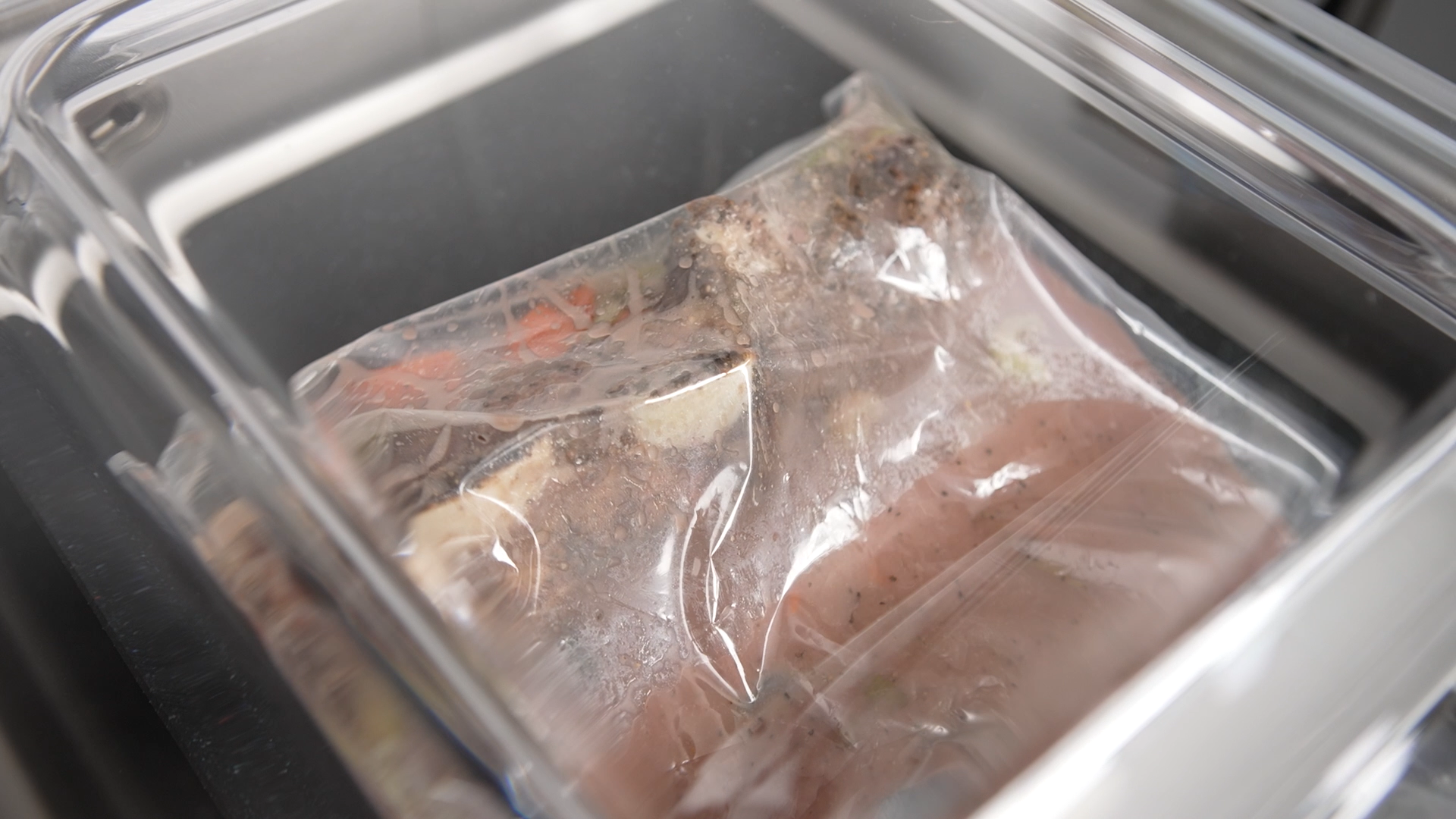
Vacuum sealing products with sharp bones can create a practical problem: the bone can puncture the bag.
Chef Lamar Moore demonstrates this with bone-in short ribs. He uses the Soft Air function when vacuum sealing the meat, allowing him to seal the product while reducing the risk of the bone puncturing the bag.
A punctured bag can allow product and sauce to escape during sous vide cooking, potentially resulting in product loss and a less controlled cooking process
.
Application: Bone-in meat and other products where conventional vacuum sealing may create a risk of bag puncture.

2. Managing Liquids During Vacuum Sealing
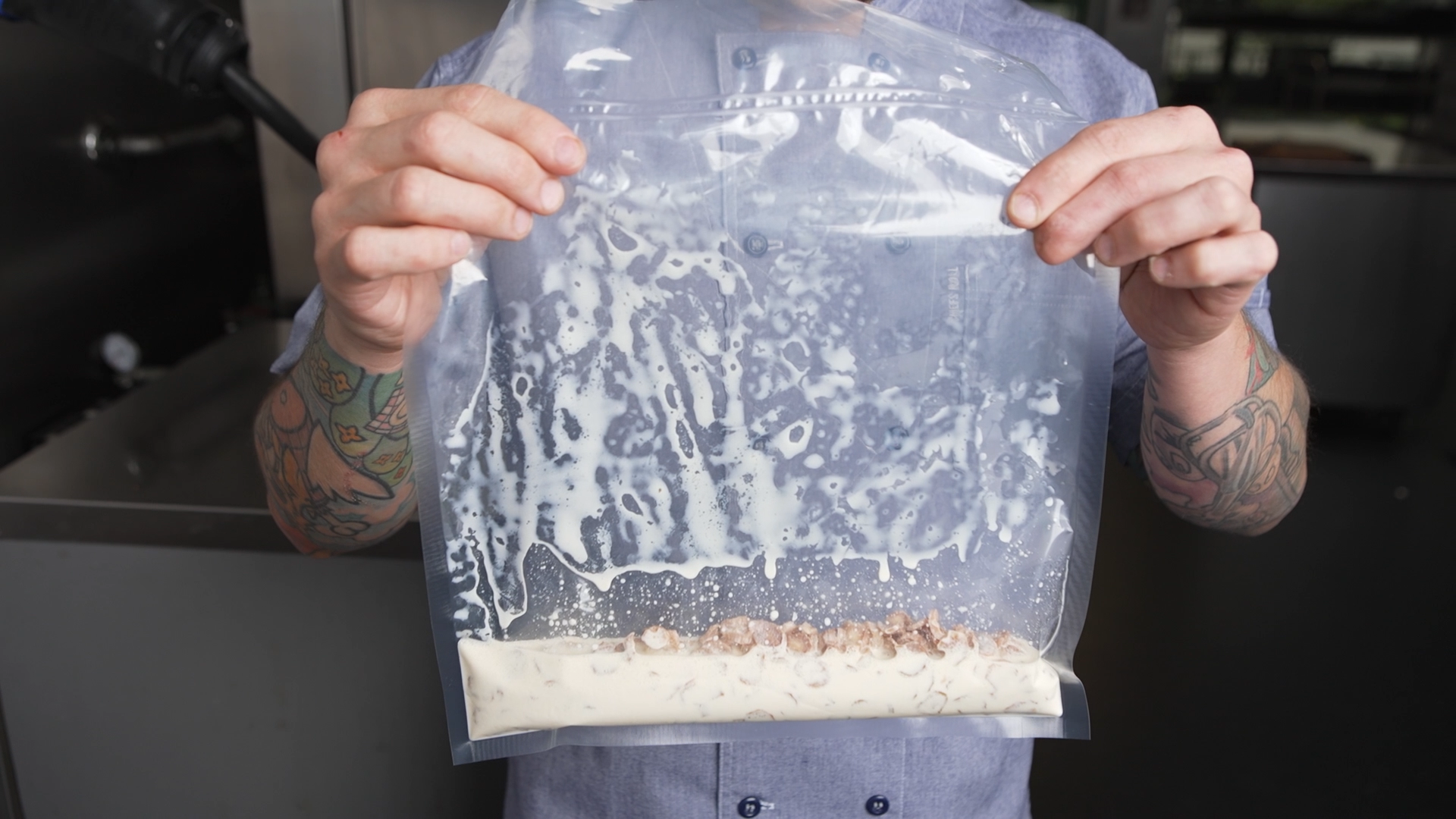
Liquids can create another challenge when vacuum sealing. Chef Richard Farina uses the liquid setting when vacuum sealing a sauce containing half-and-half. He explains that the machine's sensors monitor the process, helping prevent the bag from blowing out and creating a mess inside the machine. For a busy professional kitchen, controlling this process isn't simply about convenience. Avoiding failed seals and unnecessary cleanup can save time and reduce interruptions during service.
Application: Sauces, purees and other preparations containing liquids.
3. Creating Consistent Texture and Thickness Through Compression
Vacuum technology can also be used to compress food, creating changes in texture while helping produce consistent shapes and thicknesses. Chef Don Young uses a Henkelman Boxer 35 to compress duck after cooking and trimming the product. He explains that compression gives him consistent texture and thickness, which contributes to consistent cooking and presentation. This is particularly useful when a preparation needs to be reproduced repeatedly.
Application: Compressed proteins, fruits, vegetables and other preparations where consistent thickness or texture is important.

4. Removing Air From Delicate Preparations
Vacuum technology can also be useful when air bubbles are undesirable. Chef Brad Kilgore uses the Compact function on a Henkelman vacuum sealer to remove air bubbles from a peach fluid gel. He runs the process twice to achieve the clarity he wants from the preparation. Chef Carolina Molea uses vacuum technology in a similar way when working with an orange fluid gel, using the vacuum sealer to remove air bubbles after preparing the mixture.
Application: Fluid gels, purees, sauces and other preparations where trapped air can affect appearance or texture.

5. Accelerating Marination and Infusion
Vacuum can also play a role in incorporating flavors into ingredients. Chef Chris Sayegh uses the marinade function when preparing branzino, explaining that it allows the marinade to be absorbed into the fish much faster than his other methods. Chef Carolina Molea uses vacuum compression when preparing pears with Grand Marnier, vanilla and orange zest. These applications demonstrate how vacuum technology can become a tool for flavor development rather than simply a method of packaging food.

Vacuum Technology and Batching
Batching is one of the biggest opportunities for professional kitchens using precision equipment.
Instead of preparing every portion individually during service, chefs can prepare components in advance and use controlled processes to maintain consistency.
Chef Richard Farina describes producing large quantities of sauce puree using the Rational oven. He notes that he could cook as many as 50 bags at the same time rather than setting up a large water bath for a smaller individual batch.
Chef Lamar Moore similarly emphasizes batching as a way to maintain recipe adherence and ensure that plates are consistent.
Vacuum sealing fits naturally into this approach because prepared components can be portioned, sealed and incorporated into a controlled production workflow.
Precision Equipment Helps Reduce Dependence on Manual Processes
One of the recurring themes throughout the chef series is that precision equipment allows chefs to spend less time monitoring routine processes. Chef Carolina Molea describes programming her Irinox equipment for overnight production and says the change eliminated the need for an overnight baker, saving more than 1,500 man-hours per year in her operation. Chef Joseph Saddy describes a similar benefit. By presetting cooking processes, he can give employees repeatable instructions and return his attention to other parts of the kitchen. The broader lesson is important: precision equipment can help turn a chef's process into a repeatable system. That can be especially valuable when a kitchen has limited staffing or varying levels of experience among its team members.
Vacuum Technology Can Help Support Quality and Efficiency
The value of vacuum technology isn't necessarily one individual function. Its value comes from what happens when it becomes part of a controlled kitchen workflow.
A chef can:
- Prepare larger batches
- Portion consistently
- Control textures
- Manage liquids
- Compress ingredients
- Marinate ingredients
- Remove unwanted air
- Prepare components ahead of service
- Integrate vacuum sealing with sous vide cooking
- Reduce unnecessary product loss
- Create repeatable processes
The chefs in this series demonstrate that equipment is most effective when it supports a clearly defined culinary process.
Chef Don Young summarizes the broader benefit of precision equipment by connecting it to consistent results, reduced waste and more efficient kitchen operations.
The Chef Remains in Control
Technology doesn't replace culinary judgment. The chef still determines the desired texture, flavor, temperature, presentation and timing. The equipment provides the precision and repeatability needed to execute that vision.
That distinction comes through clearly in these demonstrations.
The chefs aren't using technology simply because it is automated. They're using it because it gives them greater control over a specific part of the cooking process.
Whether that means protecting a bone-in short rib during vacuum sealing, compressing duck for consistent thickness, removing air bubbles from a fluid gel or accelerating the marination of fish, the technology is being applied to solve a specific culinary problem.
Frequently Asked Questions
What can a commercial vacuum sealer be used for besides food storage?
A chamber vacuum sealer can be used for a variety of culinary applications beyond traditional food packaging, including sous vide preparation, compression, marination, handling liquids and removing air from certain preparations. The appropriate application depends on the food and the vacuum sealer's capabilities.
How does vacuum sealing help with consistency?
Vacuum sealing can help create repeatable portions and controlled preparation processes. When combined with batching and other precision equipment, it can help kitchens reproduce the same preparation more consistently across multiple portions and shifts.
Can vacuum sealing help with sous vide cooking?
Yes. Vacuum sealing is commonly integrated into sous vide workflows because it allows food to be enclosed in a sealed bag before controlled cooking. In the chef demonstrations featured here, vacuum sealing is used as one step in a larger cook-chill-seal-cook workflow.
What is Soft Air used for in a chamber vacuum sealer?
In Chef Lamar Moore's bone-in short rib application, Soft Air is used to help vacuum seal meat containing a bone while reducing the risk of the bone puncturing the bag.
What is vacuum compression used for?
Vacuum compression can be used to create more consistent texture, thickness and presentation. Chef Don Young, for example, uses compression on duck to achieve consistent thickness and texture before cooking.
Can vacuum technology be used to remove air bubbles?
Yes. Chef Brad Kilgore uses the Compact function to remove air bubbles from a fluid gel, while Chef Carolina Molea uses vacuum technology to remove air from an orange fluid gel.
See the Chefs in Action
The best way to understand these applications is to see them in the kitchen.
Our Kitchen of the Future chef series demonstrates how vacuum technology works alongside other professional equipment to improve control, efficiency and consistency—from bone-in short ribs and dry-aged duck to fluid gels, infused fruit, branzino and watermelon tuna.
Explore the individual chef applications to see how each technique is used in a real professional kitchen.
The Bottom Line
For professional chefs, vacuum technology is much more than a way to package food.
It can become an important part of a larger system for batching, consistency, efficiency, precision and quality.
The six chefs featured in this series use vacuum technology in very different ways, but their goals are remarkably similar: make the process more predictable, reduce unnecessary work, maintain quality and give their teams the tools to reproduce the chef's intended result.
When vacuum technology is combined with other precision equipment—such as combi ovens, blast chillers, induction cooking systems and sous vide equipment—it becomes part of a connected workflow designed around one objective:
better results, more consistently, with greater control over the kitchen process.